


And now for the big question…how should we relate to each other? For the Christian the answer is simple, we need to respect the dignity of each and every human being as being made in the image of God (Gen 1:26-28). Then we need to love our enemies and pray for those who persecute us (Matt 5:43-48). Simple but not easy and always a challenge.
I was on a course recently and the dinner conversation turned to politics. A priest sitting next to me launched into a tirade against Donald Trump and was getting quite angry. I did attempt to state a few things I liked about Trump’s policies whilst he was in office but this seemed to make him angrier. It is as if we somehow need an enemy and the closest and easiest one to hand will do especially one we will never get to know personally.
A traumatic event happened to me in childhood. I was viscously attacked by a gang of youths outside my home in London for what I perceived was the politics of my parents. They rubbed a sweet packet covered with some sort of chemical into my eyes. It set in me a deep hatred of anything that I thought was neo-Nazi.
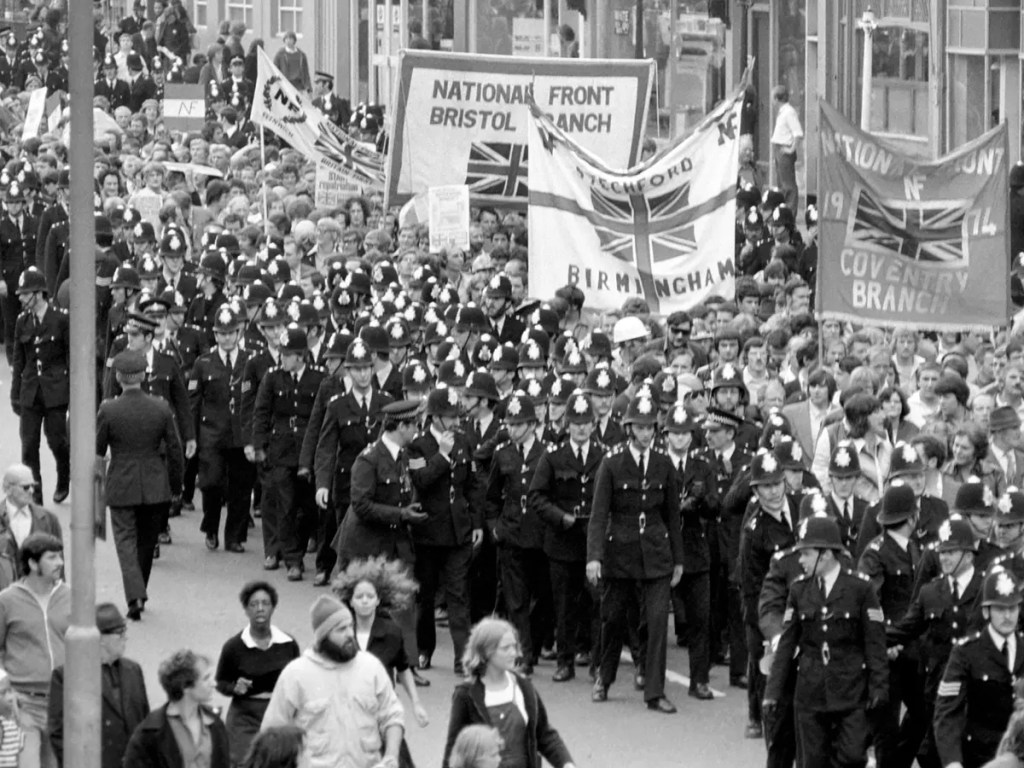
I have just finished reading the Joseph Pearce autobiography, Race With the Devil: My Journey from Racial Hatred to Rational Love. The early chapters are my story too. Told from the other side of the fence, the other side of the human need to divide. I knew of Joe Pearce as a kid. He was one of the leading lights of the National Front and edited their youth newspaper ‘Bulldog.’ I hated him, because I had to hate him. We knew all the names of the National Front leaders and hated them. Pearce stood for everything that was wrong in the world, he was a bad fascist and I was a good communist. I never for one minute stopped to think that he might hate me and everything I stood for too. I never thought for one minute that maybe a good thing to do would be to sit down with him and have a calm, rational discussion about our respective ideas…it might not have been calm and rational, but if it had, it probably would have led us both more quickly to the ideas of distributism and subsidiarity espoused by Chesterton and Belloc. But we didn’t want that, our messed up, mixed up emotional states demanded an enemy. Yet Pearce recounts what he describes as ‘acts of love’ shown to him by others that helped him eventually to see another way. One of these was after a BBC Radio One panel debate on immigration which he had taken part in. One of his two opponents on the panel was Jake Burns, lead singer of the punk band Stiff Little Fingers. Burns approached Pearce after the show and asked him to sit down and have a pint with him in the local pub. Pearce was so amazed that this came from a perceived ‘enemy’ that he took up the offer. He can’t recall the conversation but the sheer act of kindness from Burns had a huge impact on him.
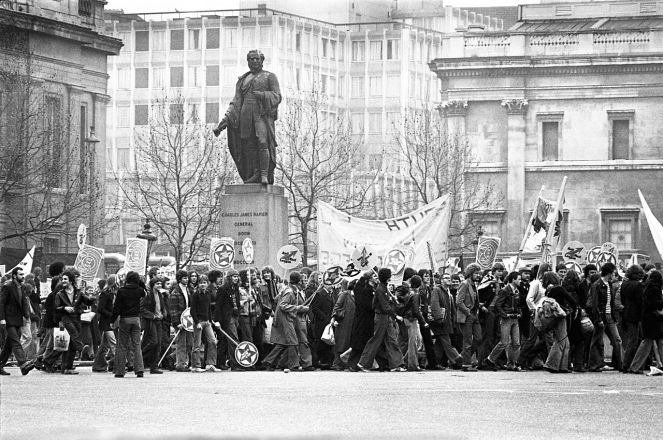
Pearce describes in his book his interest in music and about the growth of Rock Against Racism and the famous march from Trafalgar Square to Victoria Park in 1978 for a concert featuring The Clash. I was there with my elder brother and remember it well. He describes how he and his National Front colleagues were outside a pub, en route, holding a counter demonstration. I vividly remember that too, as the angry threatening exchanges (mostly from our side as the NF skinheads just seemed to be mocking us) looked like they could easily boil over into violence. He was on one side of a great divide of hatred and I was on the other. I met Christ in a tobacco field in Bosnia in 1986. He met Christ in a prison cell in December 1985. We were fellow travellers on the same road and didn’t realise it. Pearce was received into the church in 1989 and I had no idea until I saw an interview with him on YouTube during the covid lockdown in 2020.
How many other people have I come across, who I have not liked or fundamentally disagreed with, that have been fellow travellers without me realizing it? We are all fellow travellers in this life which is why St Benedict call us to welcome the stranger as though we are welcoming Christ himself. Love your enemies, you don’t have to agree with them but you do have to change the dynamic of your interactions. You do need to sit down next to them.
Maybe we have lost the art of rational debate? G.K. Chesterton knew how to sit down with his enemies (or to stand with them!) Chesterton loved to debate his adversaries. He is famous for his sparing with George Bernard Shaw. I love the exchange whereby Chesterton, scorning Shaw’s vegetarianism proclaims, “If anyone looked at you they’d think Britain was undergoing a famine.” To which Shaw replies, “If anyone looked at you, they’d think that you had caused it!” Chesterton and Shaw engaged in public debates from 1911 to 1928. Their last one was entitled “Do We Agree?” Chesterton proclaimed that Shaw would agree with his views…if he lived for another 300 years! Chesterton paid tribute to Shaw in his autobiography…
“I have argued with him on almost every subject in the world, and we have always been on opposite sides, without affectation or animosity. . . . It is necessary to disagree with him as much as I do, in order to admire him as I do; and I am proud of him as a foe even more than as a friend.”
take a leaf, foe or friends, and sit down next to them.
 Brother Alberic