



For though we live in the world we are not carrying on a worldly war, for the weapons of our warfare are not worldly but have divine power to destroy strongholds. We destroy arguments and every proud obstacle to the knowledge of God, and take every thought captive to obey Christ.
And so, back to the perennial question…am I anti technology? I am here using my lap top to create these words. But then I engage with the question, ‘choose what is helpful and leave the rest aside.’ This has practical import in all aspects of daily life…so I hereby pose the important question…broom or vacuum cleaner?
To begin I wish to clarify two things. I use the term ‘broom’ because it is more familiar to me. Whilst I appreciate that in Ireland the generic term ‘brush’ is most commonly used. A big brush as opposed to a small brush. I asked someone recently why don’t they use the word broom for said object and they replied that a broom is what a witch rides around on! I guess broom is still associated with the original bunch of twigs tied together and attached to a long handle. I have to also clarify that I refer here to uncarpeted floor…I have tried to sweep a carpet with a broom and it doesn’t work so well!
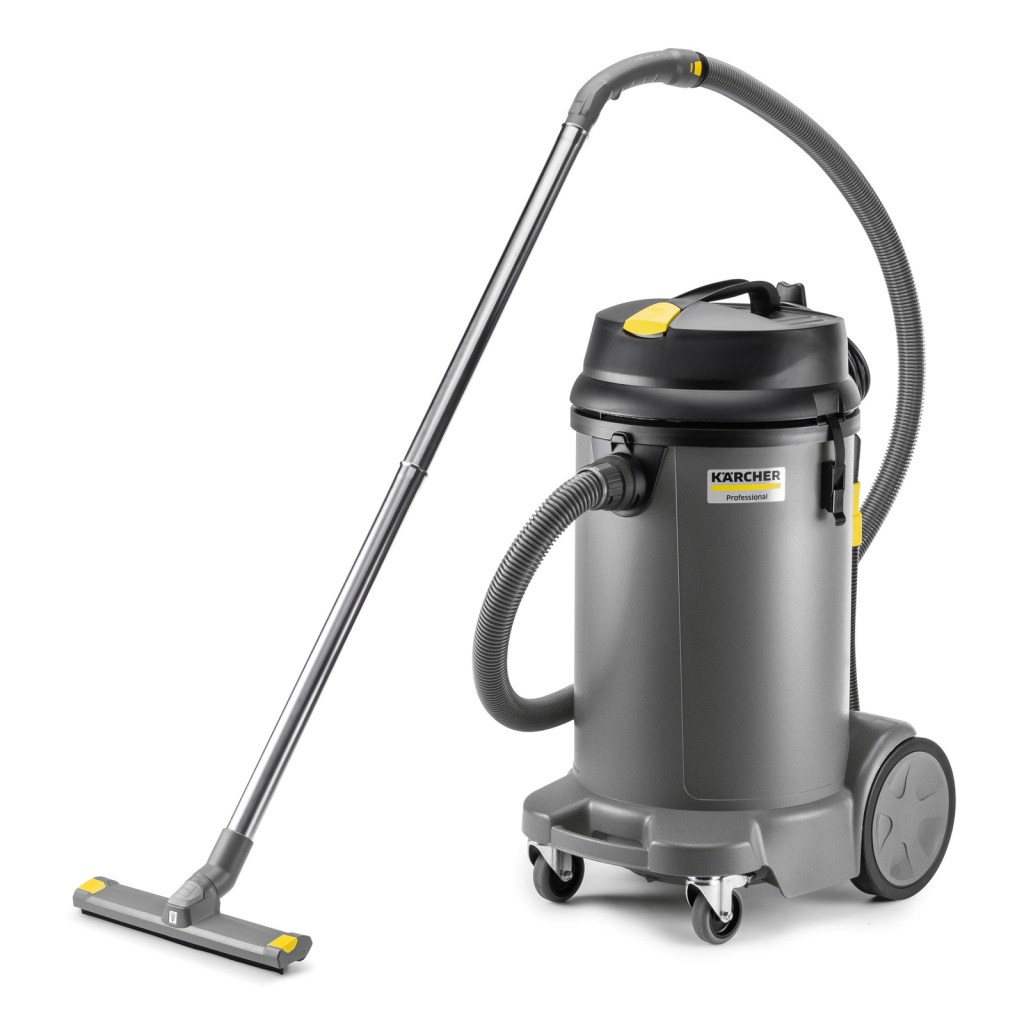
The vacuum cleaner (I still call it a ‘Hoover’)…It is efficient. It does the job quickly. It sucks up all the dust and bits of fluff, leaving nothing in its path. A couple of years back, when I was living on my own, I had the sheer joy of buying a Dyson cordless. Its suction was mighty and you could whizz around quicker than ever, unencumbered by the tangle of a power cable.
In the middle ages Cistercians were at the cutting edge of farm and land management. They were actively involved in land clearance and reclamation, draining marshlands, clearing woodlands and converting stagnant pools into running water. In Britain they were amongst the first to use fulling mills, tanning mills and the water-driven hammer forge, also developing the use of taps for the new walled lavatorium (https://www.dhi.ac.uk/blogs/cistercians/cistercians-in-a-changing-world/). They were at the forefront technological development…so today you’d expect there to be a Dyson cordless in every monastery?!
So what is wrong with efficiency and quickness? What is wrong with getting ‘boring’ jobs done so that one can spend more time on things pleasurable. Our world’s obsession with material comfort and pleasure is the driving force behind many developments not least the rapid development of AI…with all the dehumanising dangers that may bring. It fails to recognise that within work that one considers boring or ‘laborious’ there might be a key to happiness and contentment. This is where the Benedictine mantra of ‘Ora et Labora’ comes in, with its emphasis on work becoming prayer and prayer becoming work…that our lives are not meant to be compartmentalised.
One negative thing the vacuum cleaner is, is that it is noisy (although this might well change with technological development – a silent vacuum cleaner?) The Broom is slow and laborious. It never gets up all the dust and you are constantly turning it upside down to pick off the bits of fluff! But it is not noisy and there is a certain soothing aspect to its sweeping motion. St. Paul calls us to pray without ceasing (1 Thessalonians 5:17). Being able to pray whilst doing all the ordinary things in life is a real blessing. I don’t claim to have mastered it, but I am becoming more aware of it. Sweeping the floor is one of these moments when I can become attuned to God’s presence and respond in praise. I have often heard it said that prayer without ceasing can be linked to the continuous process of our breathing…the Jesus Prayer for example, of ancient use, is a good one for this. Breathing in on ‘Jesus Christ, Son of God’ and then breathing out on ‘have mercy on me a sinner.’ Practising this so that your very act of breathing becomes a prayer, giving form to St Paul’s ‘when we don’t know how to pray, the Holy Spirit intercedes with sighs deeper that words’ (Romans 8:26). This, though, implies a certain stillness that can only be done in times of formal prayer.
So what about ‘prayer in motion’? Everything we do can become prayerful, even if we are not fully conscious of it. I am reminded of the famous quote from Br Lawrence (Practice of the Presence of God) ‘Lord of all pots and pans and things, make me a saint by getting meals and washing up the plates.’ Lord make me a saint by sweeping the floor with a broom? Prayer in motion must surely involve a slowing down. How prayerful can we be when we are continuously rushing and anxiously trying to get something done in a set time (regardless of the inevitably that we all have to operate in this way sometimes). We have to create a stable rhythm to our lives, that which enables prayer. The sweeping movement of the broom as opposed to noisy quickness of the vacuum cleaner, could well contribute to creating this rhythm.
St Paul tells us that our spiritual weapons are those that have ‘divine power to destroy strongholds’ (2 Corinthians 10:4) He invites us to “tool up” and put on the armour of God. Taking the shield of faith to ‘ward off the fiery darts if the evil one’ (Ephesians 6:16) and the sword of the spirit which is God’s word. I choose the broom, it is my weapon of war against the evil one. And as I sweep the floor I praise God for all the goodness he has given me. I sweep away all the negativity, hurt and harm that I have accumulated over the years.
I wrote a poem in 1988 whilst in Taize. It was a reflection on being in community and how cleaning out the showers and toilets was as much a prayer as being in the church. It was an eye-opener for me…or rather a spirit-opener! The love of God can enrich all aspects of our lives if we slow down and allow his spirit to permeate all our actions.
Living Lord, I love you living Lord,
In the living spaces of our living lives.
Your love shines through
The living that we share.
Coming from the muck and grime – going back to there.
(Of Holy Toilets and Living B.P. 1988)
The broom may be inefficient, but it is a mighty tool in the hand of The Lord… praise be to God!
 Brother Alberic