
The day before yesterday, as I was walking the round of the cloister of the monastery, the brethren were sitting around forming as it were a most loving crown. In the midst, as it were, of the delights of paradise with the leaves, flowers, and fruits of each single tree, I marveled. In that multitude of brethren I found no one whom I did not love, and no one by whom, I felt sure, I was not loved. I was filled with such joy that it surpassed all the delights of this world. I felt, indeed, my spirit transfused into all and the affection of all to have passed into me, so that I could say with the prophet: “Behold, how good and how pleasant it is for brethren to to dwell together in unity.” psalm 132.
St. Aelred of Rievaulx ‘On Spiritual Friendship’ book 3 / 82
I read St. Aelred’s ‘On Spiritual Friendship’ last year. At the time the above quote struck me as unusual and I have continued to dwell on it. In the twelfth century the monastic cloister was a place of activity. Aelred was ‘walking the round’, and I find it hard to believe that he was just checking up on his monks. The brothers were ‘sitting around’, one can only assume that they were either reading or praying, or both! Aelred was probably himself praying as prayer is not limited to sitting still. I had an encounter with this recently. An elderly woman comes to compline quite frequently and sits at the back of the public church. One evening I arrived ten minutes early and saw her pacing in a square around the public church. Initially thinking her mad, I further reflected that she was more than likely praying as she was going in the usual anti-clockwise direction (the traditional way that mirrors the direction of the sun from east to west). Inspired by this I spent some of my early morning prayer time traversing the cloister. The cloister is a powerful place of prayer, but why so?
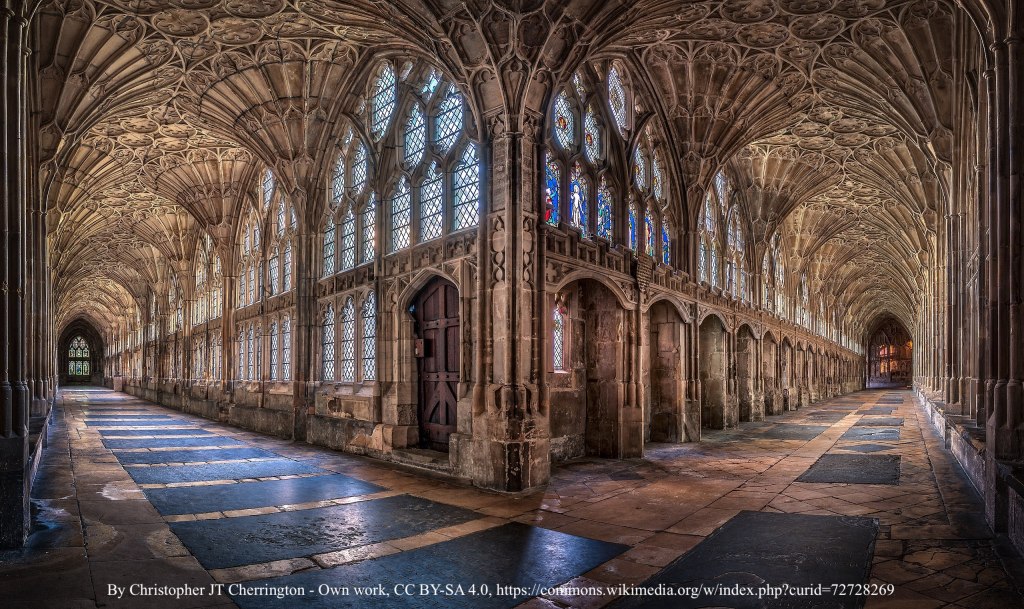
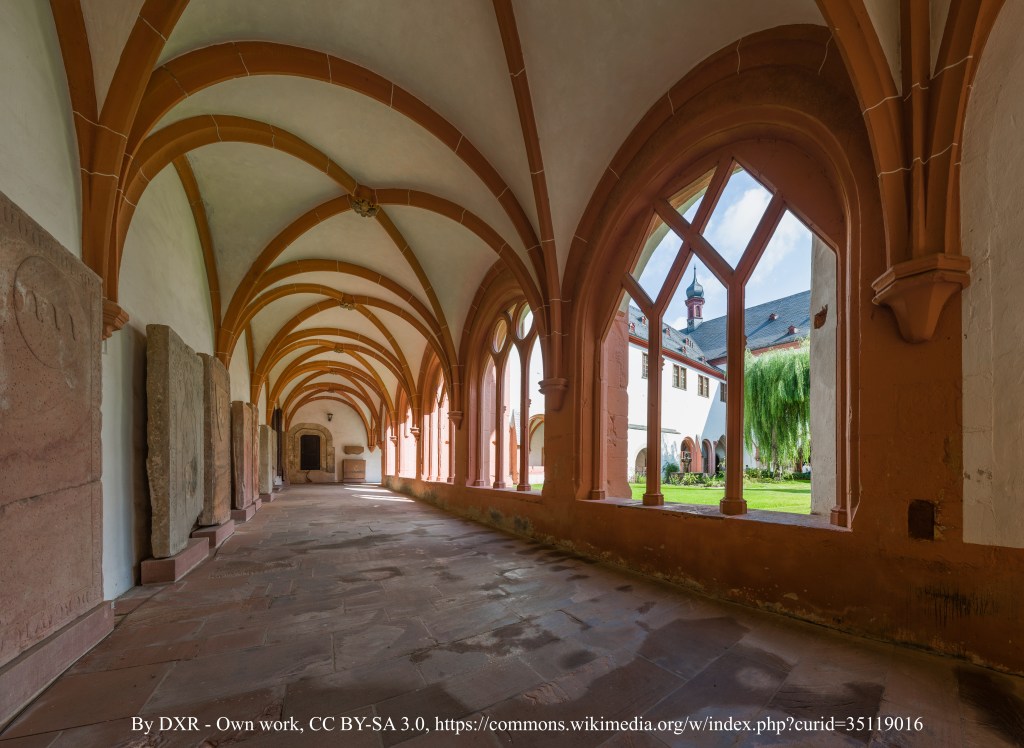
The shape of the cloister can find its antecedents in the old Roman dormus (town house built around an inner courtyard). It consists of a square shaped covered walkway surrounding a garden or ‘cloister garth’. This would have enabled both light for reading and shelter from rain. The earliest cloisters as we know them emerged in the eighth century. Walter Horn (in his 1973 work ‘On the Origins of the Medieval Cloister’) suggests that, in the early mediaeval period, the scattered and manorial estate of most abbeys led to a need for a “monastery within a monastery” in the form of a locked cloister, the claustrum – an enclosure apart from the world. This architectural solution enabled the monks to perform their sacred activities away from laymen and servants. This probably explains the activity in Aelred’s account. The early cenobitic communities of Egypt, and of the Celtic church, had no need for this separation as there were no ‘lay serfs’ attached to the monastery and no need for a separation within the fenced (or island based) monastic community.
So to Aelred the cloister and its garth were the “delights of paradise” a place of encounter with the divine. I cannot claim that my experience of monastic enclosures is vast, but based on it I can say that we have come a fair way away from this vision of Aelred. Many cloisters today appear merely as corridors, a means of travelling from one place to another. It may always have had that aspect but maybe today this is accentuated by our busyness. I have encountered two and three sided cloisters. Cloisters where there are possibly two garths. And then I have seen a monastery with a number of mini interior gardens, which seem to take away from the centrality of the garth. With the advent of the use of glass the garth became somewhat separated from the cloister itself. Then, for some reason unknown to me, many a cloister window became translucent so that the garth cannot be seen. This is such a pity, as it makes the cloister more of a corridor and less of a place for reflection.
So is the cloister and its garth merely an architectural anomaly of a certain historical period? What is it that makes it a powerful place of prayer? The separation of enclosure is key along with the idea of an inner-sanctum. ‘Enclosure’ allows the monk to put distance between himself and the distraction of worldly things that would move his focus away from the divine. The monastic enclosure garden in Roscrea, outside of the monastery building, is a beautiful and peaceful place. It does though present the worldly noises of a school, a farm and people pulling up in their cars to walk in the woods. When sat in the cloister garth, the noises are distant and the stillness is palpable, an ideal place for prayer.
Our life with God is an inner journey. A journey from the superficial to the meaningful. From the frivolous to the fruitful, from fantasy to truth. Going deeper into prayer and ones relationship with God, involves a ‘movement’ to a more central point. This movement is represented very well in the architecture of a monastery, by the opportunity to move into the cloister and then into the garth from the functional buildings surrounding it. This makes the garth the very centre, the core of our activity. It needs to be accentuated not obscured, prioritised not minimized. We could do with creating what Aelred observed as the delights of paradise with the leaves, flowers, and fruits of each single tree. Placing oneself in the garth needs to be inspirational. Sure, it’s cold in winter and we might get rained on, but that’s life!
I can make a link with this theology of the architecture of a monastery to St. Theresa of Avila and her ‘Interior Castle.’ St. Teresa’s best known work is a description of the development of a prayer life. It describes the soul as it were a castle made of crystal with seven rooms or ‘mansions’. At the centre of the crystal is the true light, Christ the King, who illumines the whole crystal castle. The closer we come to the centre of the castle the greater the light. Going deeper into the castle chambers is a fluid thing, there is a lot of back and forth, it is not like achieving the next level in a computer game! This is why the rooms are not on different levels – you can go in and out of them but they do lead, in a consequential order, into a deeper relationship with God, receiving his grace and being refreshed by it as if by water – recognising and satisfying our spiritual thirst. In the fourth mansion (chapter 2) St. Teresa compares the spiritual life to two basins being filled with water. One is filled by a system of aqueducts and pipes. This represents our devotions and prayers. The other basin is filled by being close to the source of the water as in standing under a waterfall. The first basin, our mental prayers, are good but we need to be aware that these ought to be drawing us to the source, to the centre whereby God, through his own initiative, fills us with his light and love – those things that come to us through our times of consolation amid our struggles. St Teresa is telling us to look to the source and be drawn to the centre of His love.
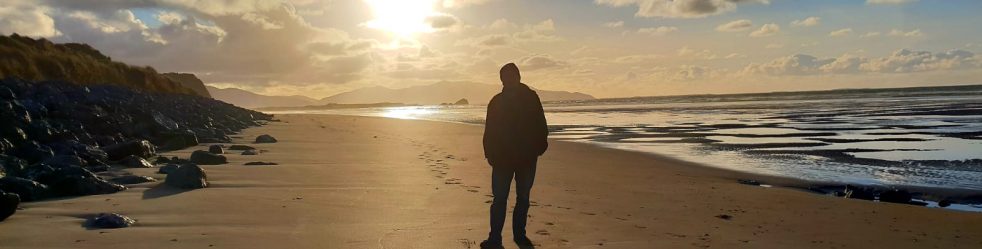
Now I am well aware that normal people do not live in Monasteries! However the quest for a silent and peaceful place is universal, that place where we can encounter our inner self and our relationship with God, that inner-sanctum. These can come in various shapes and forms, from wandering in the hills to looking out across the sea to the peace of a beautiful garden. My interior castle in the town of Roscrea is the castle garden. I like to visit it whenever I find myself in the town. You have to walk through the castle to get to it and often on weekday mornings there are few if any other people there. It is beautifully kept with hedges and flowers and a fountain in the very centre – not quite St. Theresa’s waterfall, but close. If not literally, I can spiritually stand beneath it.
We all need a place like it…so get thee to a garth!
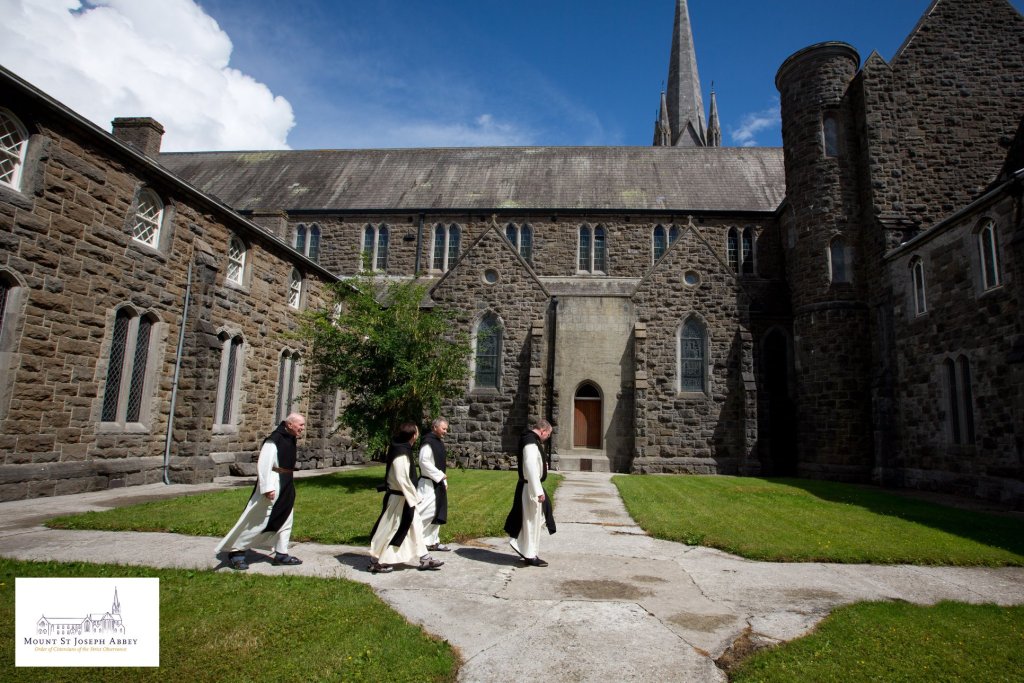
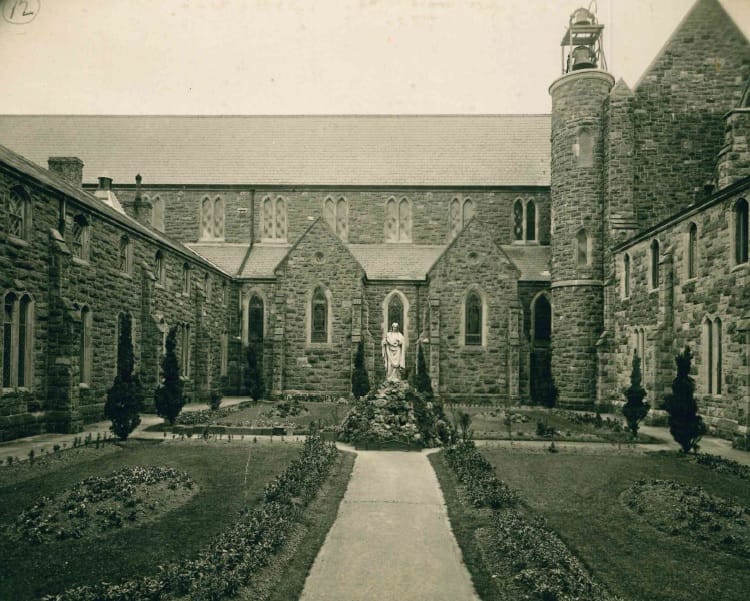
Mount St Joseph Abbey – Cloister Garth ——————— The Garth as it was – many years ago.
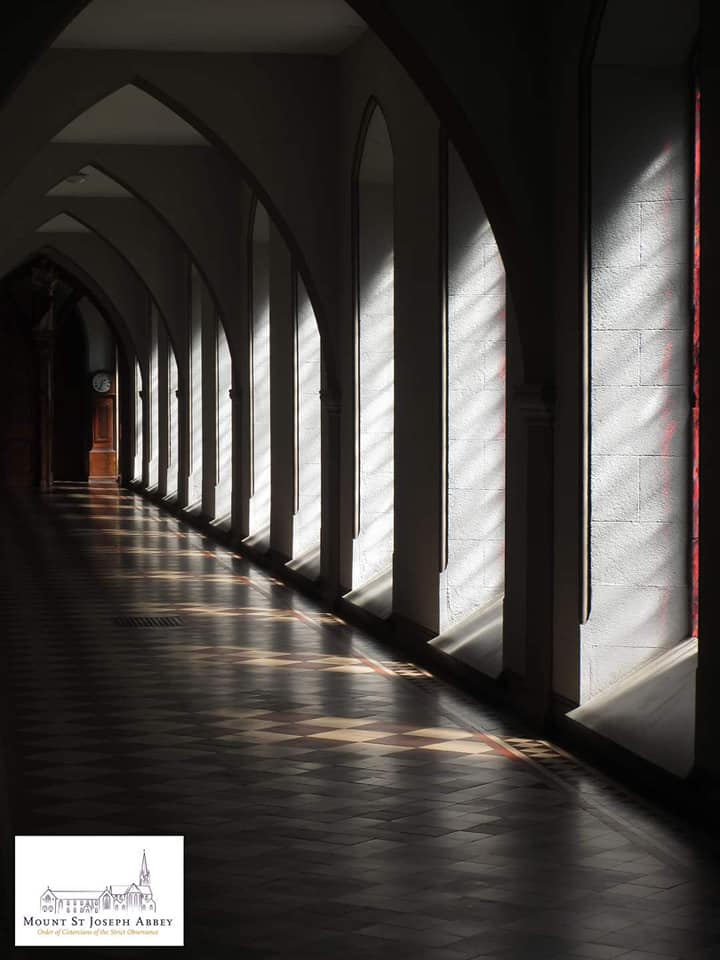
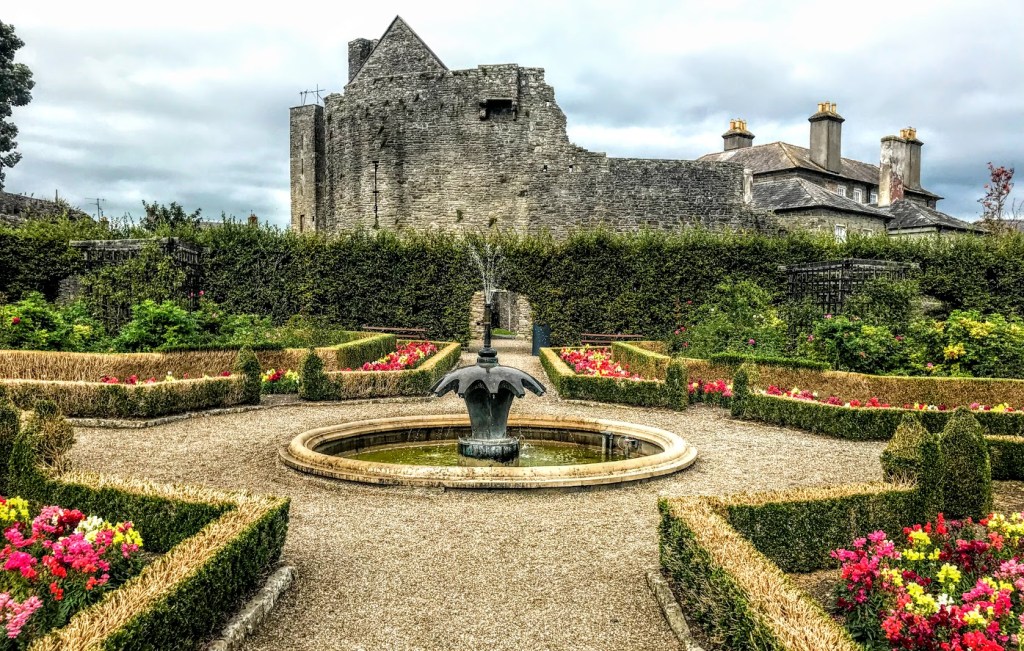
Mount St Joseph Abbey – Cloister ———————— The Castle Garden, Roscrea, Co. Tipperary
 Brother Alberic