


The character Amos Hart, from the musical ‘Chicago’, made an appearance in my last blog on God as our advocate. Being instantly forgettable as he is, he remained a brief and passing comment, until now. It got me thinking, always a dangerous thing to do, about the nature of our humanity rightly ordered to God, and where ascetic practices fit in to this.
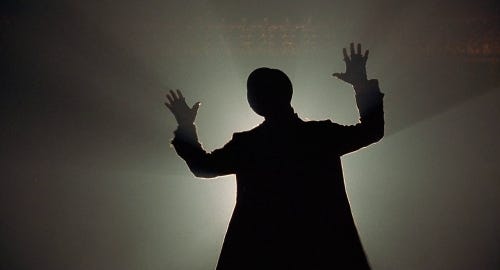
Amos Hart sings the song ‘Mr Cellophane’ after being considered an irrelevancy by Roxy Hart’s very famous and corrupt lawyer..
If someone stood up in a crowd
And raised his voice up way out loud
And waved his arm and shook his leg
You’d notice him
If someone in the movie show
Yelled “Fire in the second row
This whole place is a powder keg!”
You’d notice him
And even without clucking like a hen
Everyone gets noticed, now and then,
Unless, of course, that personage should be
Invisible, inconsequential me!
Cellophane
Mister Cellophane
Shoulda been my name
Mister Cellophane
‘Cause you can look right through me
Walk right by me
And never know I’m there…
Mr. Cellophane – John Kander – from the musical ‘Chicago’
It is easy to play Mr Cellophane at times. Sometimes we want to deflect attention from ourselves to others. It may be the avoidance of taking responsibility for God’s call on our life – it is called false humility. Along with false humility can be the drive for an extreme negation of self that can be disastrous for someone who is psychologically fragile or lacks self-esteem. Talk of ones ‘nothingness’ from many a saint comes from an awareness that we have come from nothing but that we have been given everything by God without any merit on our part (see 1 Corinthians 4:7). Often in the spiritual life we will hear of practices that on the surface can look like a complete negation of ourselves. Practices such as fasting (taken away from its necessary twin of almsgiving) can be taken to extremes that seriously damage the body – often among canonized saints! I recently heard a quote said from Thomas Merton, taken out of context, that we should ‘detach from ourselves.’ At face value it sounded like we should float away from ourselves and be somewhere better! What Merton actually meant was that we need to see, and use, all things in and for God and not in and for ourselves. What is needed is a detachment from our attachments, the things that prevent this, not a negation of self per se. At the risk of becoming Mr Cellophanes, which many of us are, we need to first own ourselves completely (warts and all!) and then search for how that self can be expressed and grow within a relationship to the God of love. C.S. Lewis summed up humility brilliantly when he described it as “not thinking less of yourself, but of thinking of yourself less.” This is ourselves in transition on the journey to our completeness in God within the heavenly realms. So what does this ‘transitionary’ self in Christ look like?
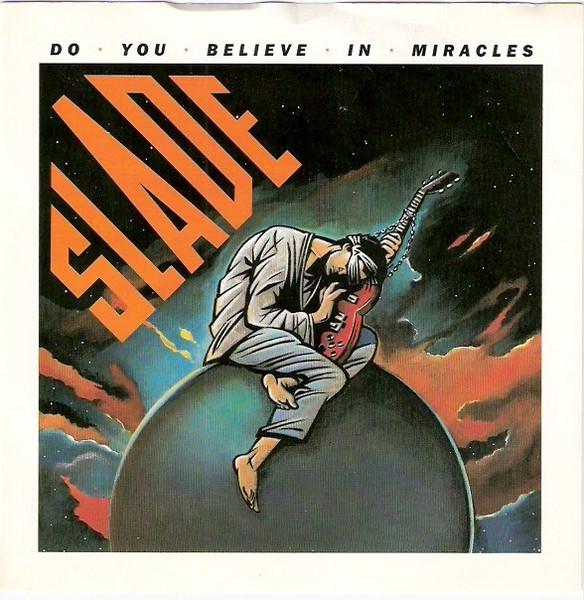
One of the biggest rock bands of the seventies were a band from Wolverhampton called Slade. They had numerous number one hits and were always on the radio, so I became quite familiar with them as a young child. In 1973 their drummer Don Powell was in a car crash that killed his girlfriend. It left him brain damaged with poor short term memory. As the band were the sum of its parts, they would not go on without him. But they found a way. As Powell could not remember the songs, when they performed live, they paused between each one. The lead singer Noddy Holder would talk to the audience while the bass player, Jim Lea, would go over to Powell and remind him how the next song went. It’s a great story and example of camaraderie and thinking of the other first. In the late 1970’s the band had lost the height of fame yet still carried on performing at small venues and writing new songs. They were approached by Bob Geldof (The Boomtown Rats), who was then at the height of his fame. He said to them he couldn’t understand how they still carried on playing to small audiences and that he surly wouldn’t be able to do that. Low and behold, the Boomtown Rats fame plummeted but Geldof did manage to carry on and went on to organise the Live Aid concert in response to the famine in Ethiopia. Slade wrote a song about it called ‘Do You Believe in Miracles’.
It was in the winter of ’79 when the band was at a low
Then we met yer man that they called The Mouth at a party there on show
He said “Why’d you carry on this way, I could never go to dat”
But he had to learn he was just the same – One step forward two steps back
Can you hear me now
Oh do you believe in miracles – Just as only dreamers can
Anything can work with a miracle
Like a bloody minded man – Like a bloody minded man…
So your man determined, he found a course
When the powers just couldn’t cope
Or did you ever think that old rock and roll
Could give the world some kind of hope
Can you hear me now, hear me now
Oh do you believe in miracles just as only dreamers can
Anything can work with a miracle
Like a bloody minded man – Like a bloody minded man
‘Do You Believe in Miracles’ Noddy Holder/Jim Lea 1985
Slade’s most famous song, still heard on the radio today at this time of year, is ‘Merry Xmas Everybody.’ The lyrics go… “And here it is Merry Christmas everybody’s having fun. Look to the future now, it’s only just begun.” Those on the transitionary journey with Christ know that their new life has only just begun and that it can be renewed every single day. They are people of hope, even in the darkest of times, looking towards a glorious future. They are people that reach out to those less fortunate than themselves. And they support and encourage those closest to them.
So what does our humanity in Christ look like in its finality…in its completion? It is always hard to describe heavenly realities from what we know from the perspective of our unperfected self. God’s revelation of himself through scripture, tradition and the sacraments gives us many a clue.
As he drew near to Jericho, a blind man was sitting by the roadside begging; and hearing a multitude going by, he inquired what this meant. They told him, “Jesus of Nazareth is passing by.” And he cried, “Jesus, Son of David, have mercy on me!” And those who were in front rebuked him, telling him to be silent; but he cried out all the more, “Son of David, have mercy on me!” And Jesus stopped, and commanded him to be brought to him; and when he came near, he asked him, “What do you want me to do for you?” He said, “Lord, let me receive my sight.” And Jesus said to him, “Receive your sight; your faith has made you well.” And immediately he received his sight and followed him, glorifying God; and all the people, when they saw it, gave praise to God.
Luke 18:35-43
We will be full of confidence (not concerned for the rebuke of others). We will be givers and receivers of mercy, we will be grateful for everything we have received and we will be givers of praise. Along with the 24 elders “enthroned” before God in the Book of Revelation, we will proclaim…“We give thanks to you, Lord God Almighty, who is and who was, for you have taken your great power and begun to reign” (Revelation 11:17). We will be full of benevolence and fully empowered.
When he came down from the mountain, great crowds followed him. And behold, a leper came to him and knelt before him, saying, “Lord, if you will, you can make me clean.” And Jesus stretched out his hand and touched him, saying, “I will; be clean.” And immediately his leprosy was cleansed.
Matthew 8:1-3
Jesus will look us in the eye and say “I will.” We will be renewed in the full glow of health, inhabiting a new body. St Paul reveals another heavenly reality to us…’Now I know only in part; then I will know fully, even as I have been fully known’ (1 Corinthians 13:12) We will see God as God is (I Am Who I Am) and he will see us as we are – no Mr Cellophanes in heaven!
St. Bernard points to heaven by expounding the fulness of our communion with others. ‘Let us long for those who are longing for us, hasten to those who are waiting for us, and ask those who look for our coming to intercede for us. We should not only want to be with the saints, we should also hope to possess their happiness.’ (St. Bernard / from the Office of Readings for All Saints / Sermo 2: Opera omnia, Edit Cisterc. 5[1968], 364-368) Scott Hahn attempts to build a bigger picture of this in his book ‘Hope to Die – The Christian Meaning of Death and the Resurrection of the Body.’ Whilst acknowledging the praises given to God, the lamb upon the throne from the Book of Revelation, he refutes the idea of this being like one big staring competition! It will be so much more. He writes as only a father can of the delight a father has in seeing his children interact with one another. ‘A father wants to fill his children with life and help them to live life to the fullest. A father also wants to see his children sharing their stories with each other, learning from each other, and loving each other. Something like that, I think, is what we are going to experience in heaven when we look into the Father’s eyes.’ (Hahn. p.100) Hahn compares our heavenly experience to the best ‘dinner party or family gathering ever.’ (p.102) We will all be sharing our stories with one another and be totally captivated and enthralled. Everything that ever happened to us will make sense and we will happily encounter everyone that has ever prayed for us – we will no longer be filled with any remorse or regret.
The incarnation of God validates our humanity. Sure, we are fallen and imperfect in so many ways, but in essence we are made in the image of Him who is Love. Christmas is a special time to celebrate this. There is no cellophane at Christmas. We are not cheaply wrapped, see through and disposable.Each one of us comes individually wrapped, beautifully handmade, unique and full of surprises! So in the words of one wannabe songwriter, (https://brotheralberic.com/2021/01/01/peel-away-the-wrapping/) start to peel away the wrapping…reveal to yourselves who you are and to others themselves, who we all really are in our divine adoption. May the Christ child be born in our hearts.
 Brother Alberic