
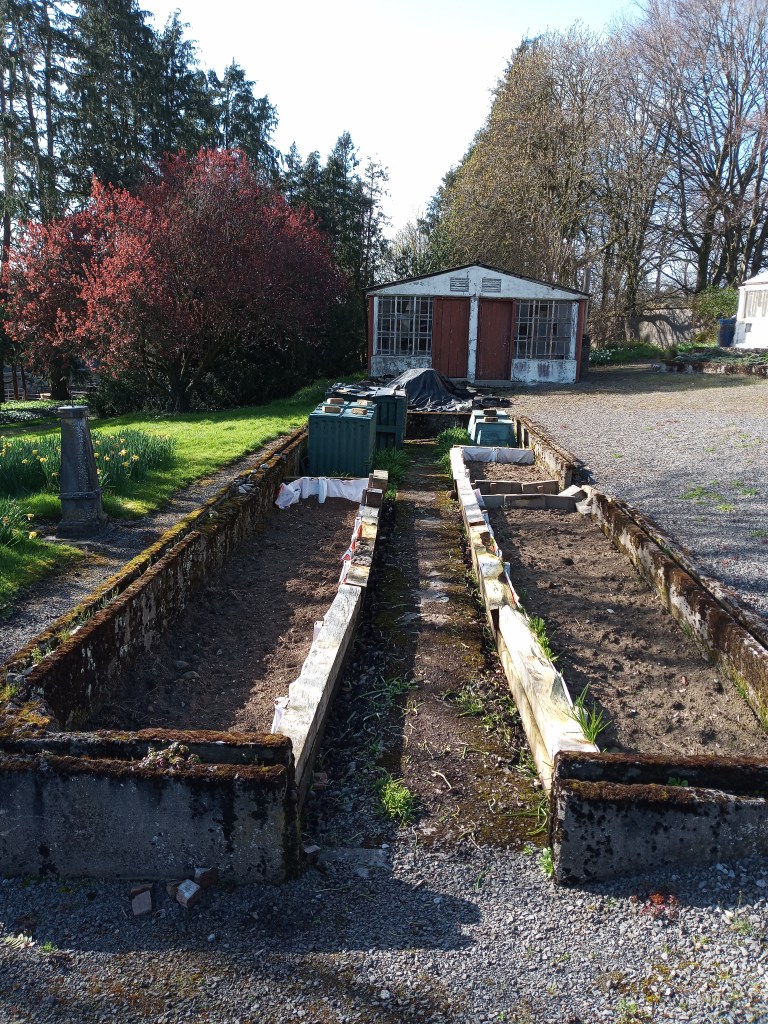
I have to leave my garden. The monastery of Mount St. Joseph Abbey is to close and I am heartbroken. My garden has been helping me to grow these past three plus years. I have planted seeds in the warmth and comfort of an indoor bathroom. When they were young but sturdy I re-potted them and placed them in the greenhouse. When all signs of frost were over I planted them in the soil, nurturing them with compost and love. Some of them died but most of them lived and grew, and grew, and in turn nourished us too. I grew tomatoes, cucumbers, peppers, sweetcorn, courgettes, strawberries and melons. Last year I planted peach, apricot and kiwi trees – investing in the crops of years to come. This year I finished the construction of outside beds, set into the concrete base of an old derelict greenhouse. Now it sits there, a barren wasteland, not to be used, to produce nothing for no-one.
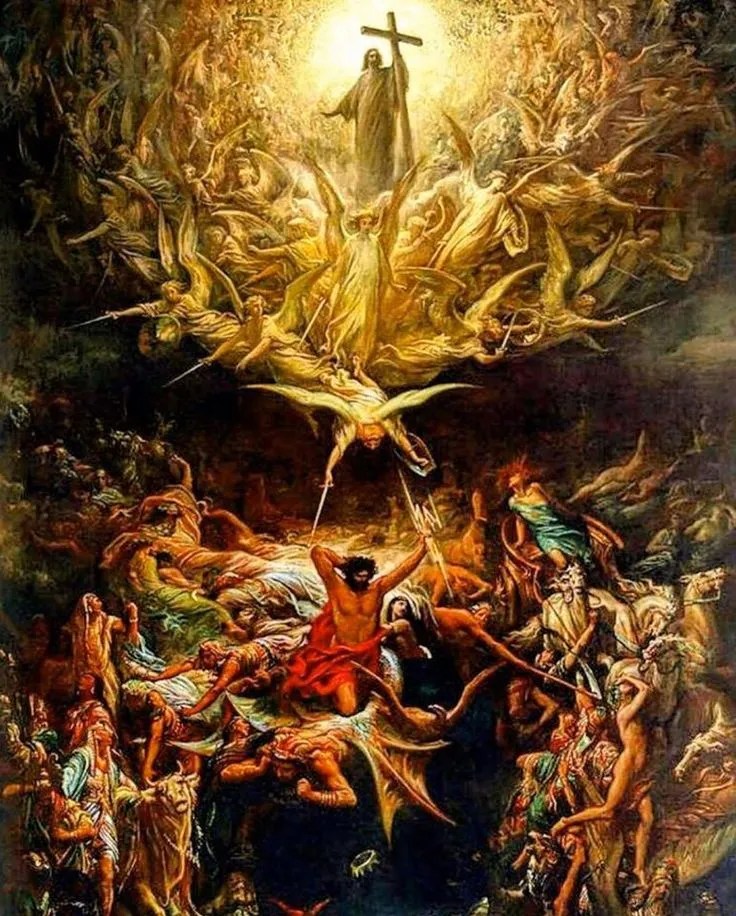
Letting go of something loved is very painful. Letting go of the pleasure seeking habits that keep us from God is a painful process. This is beautifully illustrated in C.S. Lewis’s ‘The Great Divorce.’ In chapter 11 of this post-mortem encounter with divine beings in the after life, a grieving mother demands to see her previously deceased son. She is instructed by the angel that change, whilst painful involves putting God, the author of life, first and not her son. Then a man with a demon of lust, in the form of a lizard attached to his shoulder, arrives in this ante-chamber to heaven. The angel offers to remove it with the man’s permission but informs him that it will be painful. After much remonstrating the man agrees and howls in agony whilst the lizard is killed. The lizard’s body then thrown to the ground transforms into a white stallion and carries the renewed man into heaven. Change is painful.
Purgatory is painful. Being prepared for heaven is painful. Jesus takes the moral code to another level in Matthew 5 when he equates cursing with murder and lust with adultery. Unless you settle matters here on earth you will be put before the judge and thrown into prison and, ‘Truly I tell you, you will not get out until you have paid the last penny.’ (Matthew 5:26). We have to face the hard things in this life square on otherwise we cannot move beyond them and encounter the beauty and love of God’s very presence. ‘For I tell you that unless your righteousness surpasses that of the Pharisees and the teachers of the law, you will certainly not enter the kingdom of heaven.’ (Matthew 5:20). This is why it was disappointing to hear a sermon recently by a priest celebrating a mass for the dead. In the homily he spoke of preferring to see purgatory in terms of ripening fruit after it has been picked than that of the purification done to metals (referencing the theology of Karl Rahner.) My response to this would be that the ‘telos’ of such fruit is either to be eaten or to go mouldy! Purification is getting rid of the bad bits to make us ‘perfect as your heavenly father is perfect.’ (Matthew 5:48). It cannot be anything other than painful.
The promises of the Lord are promises that are pure, silver refined in a furnace on the ground, purified seven times.
Psalm 12:6
He will sit as a refiner and purifier of silver; he will purify the Levites and refine them like gold and silver. Then the Lord will have men who will bring offerings in righteousness,
Malachi 3:3
The surrendering to such change and the pain it involves should not worry us. So much more was the pain Jesus suffered on the cross out of love for us, to will our salvation and the everlasting fulness of life. He has gone before us, paving the way and giving us the grace to persevere with joy.
And being found in human form he humbled himself and became obedient unto death, even death on a cross.
Philippians 2:8
Purgatory is the place where Justice and Mercy become entwined. It is the place where the consequences of our own personal sin have to be faced and resolved. It is the place where God’s divine mercy leads us from this place into our own completion. In Dante’s ‘Divine Comedy’ purgatory is represented by a steep mountain with seven levels or heights representing the seven deadly sins. The soul on its journey to heaven has to be purged of these sins (pride, envy, wrath, gluttony, lust, sloth, and greed.) In acknowledgement that our purgation is God’s work and needs only our willing consent, St. John Henry Newman presented a gentler image of purgatory in his ‘Dream of Gerontius.’ Gerontius is given an ecstatic vision of heaven at his death by the swift transportation of an angel. Realising his unworthiness he willingly choses the ‘Lake of Purgatory’ where he can lament his past sins and be lovingly transformed by the prayers of the church.
Farewell, but not for ever, brother dear! Be brave and patient on thy bed of sorrow. Swiftly shall pass thy night of trial here, and I will come and wake thee in the morrow.
Newman ‘Dream of Gerontius’
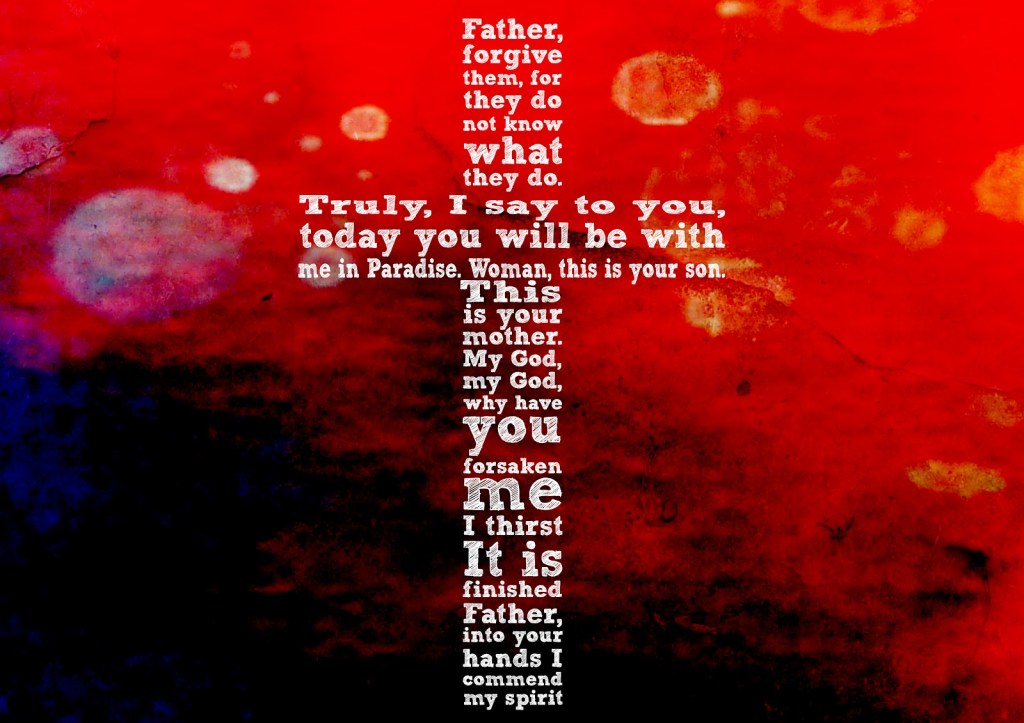
The sheer enormity of the creator of the universe becoming a man and suffering the indignity of the cross out of love for us is something to be awe struck by. But not only that, it can lift us up and show us a way through our pain and loss to embrace new life and a new way of living. During Holy Week I like to meditate on the seven last sayings of Jesus on the cross.
A jar of wine vinegar was there, so they soaked a sponge in it, put the sponge on a stalk of the hyssop plant, and lifted it to Jesus’ lips. When he had received the drink, Jesus said, “It is finished.”
John 19: 29-30
This sixth saying of Jesus from the cross fulfills the prophecy of psalm 69…
Thou knowest my reproach,
and my shame and my dishonor;
my foes are all known to thee.
Insults have broken my heart,
so that I am in despair.
I looked for pity, but there was none;
and for comforters, but I found none.
They gave me poison for food,
and for my thirst they gave me vinegar to drink.
Psalm 69:19-21
Jesus took the poison from our lives and gave us the living water from his sacred heart. “It is finished” is sometimes translated as “it is consummated”. Everything is brought to completion, the fulness of Jesus’ rescue plan for us fallen men is fully revealed on Calvary. I know that in my pain and sadness He went before me as a guide showing the way to new life. My garden is gone, I have much sadness, but the hope Christ gives me enables me to move on, trusting in that guiding hand.
This is a very good summation of the complementarity of the Dante and Newman visions of Purgatory…
https://www.stjohnthebaptistnormanton.org.uk/dante-and-newman-purgatory-justice-and-mercy-embrace
Seven
One –
“When they came to the place called the Skull, they crucified him and the criminals there, one on his right, the other on his left. Then Jesus said, “Father, forgive them, they know not what they do.”
Luke 23:34
Two –
Now one of the criminals hanging there reviled Jesus, saying, “Are you not the Messiah? Save yourself and us.” The other, however, rebuking him, said in reply, “Have you no fear of God, for you are subject to the same condemnation? And indeed, we have been condemned justly, for the sentence we received corresponds to our crimes, but this man has done nothing criminal.” Then he said, “Jesus, remember me when you come into your kingdom.” He replied to him, “Amen, I say to you, today you will be with me in Paradise.”
Luke 23: 39-43
Three –
“Standing by the cross of Jesus were his mother and his mother’s sister, Mary the wife of Clopas, and Mary of Magdala. When Jesus saw his mother and the disciple there whom he loved, he said to his mother, “Woman, behold, your son.” Then he said to the disciple, “Behold, your mother.” And from that hour the disciple took her into his home.”
John 19: 25-27
Four –
“After this, aware that everything was now finished, in order that the scripture might be fulfilled, Jesus said, “I thirst.” There was a vessel filled with common wine. So they put a sponge soaked in wine on a sprig of hyssop and put it up to his mouth.”
John 19: 28-29
Five –
“At noon darkness came over the whole land until three in the afternoon. And at three o’clock Jesus cried out in a loud voice, “Eloi, Eloi, lema sabachthani?” which is translated, “My God, my God, why have you forsaken me?”
Mark 15: 33-34
Six –
“When Jesus had taken the wine, he said, “It is finished.” And bowing his head, he handed over the spirit.”
John 19:30
Seven –
It was now about noon and darkness came over the whole land until three in the afternoon because of an eclipse of the sun. Then the veil of the temple was torn down the middle. Jesus cried out in a loud voice, “Father, into your hands I commend my spirit”; and when he had said this he breathed his last”.
Luke 23: 44-46
 Brother Alberic