
Oh well I’m the type of guy who will never settle down
Where pretty girls are well, you know that I’m around
I kiss ’em and I love ’em ’cause to me they’re all the same
I hug ’em and I squeeze ’em they don’t even know my name
They call me the wanderer, yeah the wanderer
I roam around around around…
Oh well I roam from town to town
I go through life without a care
‘Til I’m as happy as a clown
With my two fists of iron and I’m going nowhere
Dion DiMucci 1961
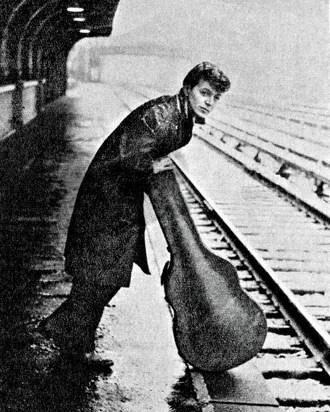
That classic pop song from Dion and The Belmonts paints a picture of a wanderer. A happy-go-lucky guy with no commitments who would turn and flee at the first sign of conflict or trouble. A quick footed philanderer who roams from town to town with no care for others but only to seek the place where the next enjoyable experience is to be found. But as the song chorus finishes, he is enclosed in himself and going nowhere.
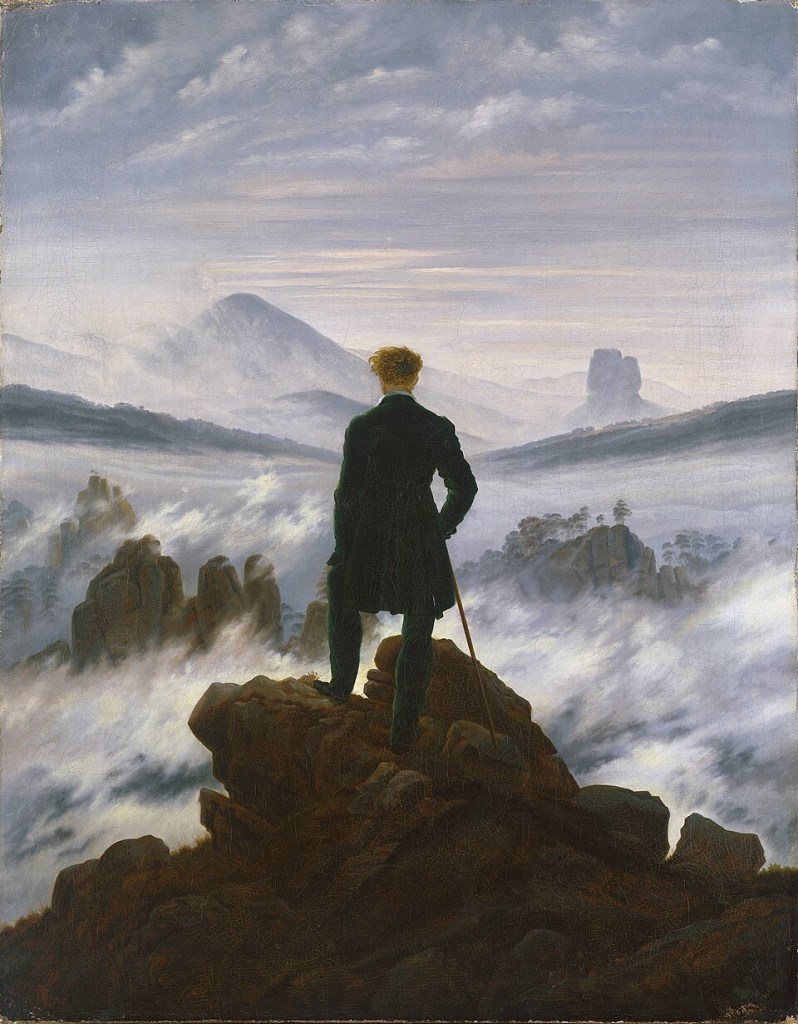
Maybe this is why St. Benedict put his emphasis on stability. He criticises the ‘spiritual philanderers’ who go from monastery to monastery seeking a better experience. He calls them the Gyrovagues (Rule of St Benedict Chapter 1). These spiritual seekers are going nowhere because they are unwilling to face themselves and their faults before God. Yet wandering per se is not a bad thing. Wandering can also be a vehicle for growth and discipleship, as well as a means for distraction and avoidance. In the Bible, wandering appears to be a predominant theme among biblical characters.
Discussing my own situation recently with someone we turned to the story of Abraham. His frequent wandering led him to places where he encountered God anew. In those places God taught him something profound, for himself and for others. One of the most powerful of those encounters is the call to sacrifice his only son Issac. A foundational Old Testament text that is often hard to make sense of. On a normal human level Abraham agreeing to sacrifice his son horrifies us. How could God ask such a thing? How could Abraham even contemplate doing so. Setting aside our 21st century lenses of living in a society that abhors child cruelty (yet ironically sanctions the unseen action of killing millions of unborn babies) we have to enter the society of Abraham, a society ruled by gods who had to be appeased. Giving them what was precious to us resulted in having them on our side. Child sacrifice was rife, as testified to by the Bible (Leviticus 18:21 / Deuteronomy 12:31) and other sources (see – https://en.wikipedia.org/wiki/Child_sacrifice). To Abraham it was a ‘normal’ request. The point is that God put a stop to it (“Do not lay a hand on the boy,” he said. “Do not do anything to him. Now I know that you fear God, because you have not withheld from me your son, your only son.” Genesis 22:12) and turned his attention to the goat, indicating a desire to move his new chosen people away from child sacrifice. This slow and patient teaching of God’s people is revealed to us over the course of scripture as a whole. It is the long slow wandering of God’s people that leads to their understanding and transformation. Eventually God turns his people away from animal sacrifice through the prophets when he says “for I desire mercy and not sacrifice, the knowledge of God more than burnt offerings” (Hosea 6:6). The fullness of God’s revelation comes when he sends his only son to die for the forgiveness of our sins, self-sacrifice becoming the new model of righteousness. This brings us full circle back to the Abraham and Issac story, showing us that it is a prefigurement of the coming of the Christ.
To become the person God wanted him to be Abraham had to become a wanderer. His wandering led to change and growth. Abram was a wanderer, he was 75 years old when God told him to leave his home and to pitch his tent in the land of Canaan where he would be the father of a great nation. He carried on wandering and went down to Egypt when there was famine in the land (Gen 12). Abraham was given the covenant of circumcision (and a name change from Abram to Abraham) at the age of 99 and a promise that his wife Sarah, aged 90, would bare them a son (Gen 17).
Jacob, the grandson of Abraham, was a wanderer and had his name changed from Jacob to Israel by God (Gen 32:28). His family also went to Egypt because of famine but stayed there to grow into a great nation. Escaping from enslavement by the Egyptians they became wanderers in the desert for 40 years. Jesus and his disciples wandered from town to town (Luke 8:1). Wandering in God’s ways is a good thing which we need to learn from and to be thankful for…
Then you shall declare before the Lord your God: “My father was a wandering Aramean, and he went down into Egypt with a few people and lived there and became a great nation, powerful and numerous. But the Egyptians mistreated us and made us suffer, subjecting us to harsh labor. Then we cried out to the Lord, the God of our ancestors, and the Lord heard our voice and saw our misery, toil and oppression. So the Lord brought us out of Egypt with a mighty hand and an outstretched arm, with great terror and with signs and wonders. He brought us to this place and gave us this land, a land flowing with milk and honey; and now I bring the first fruits of the soil that you, Lord, have given me.” Place the basket before the Lord your God and bow down before him. Then you and the Levites and the foreigners residing among you shall rejoice in all the good things the Lord your God has given to you and your household.
Deuteronomy – 26: 5-11
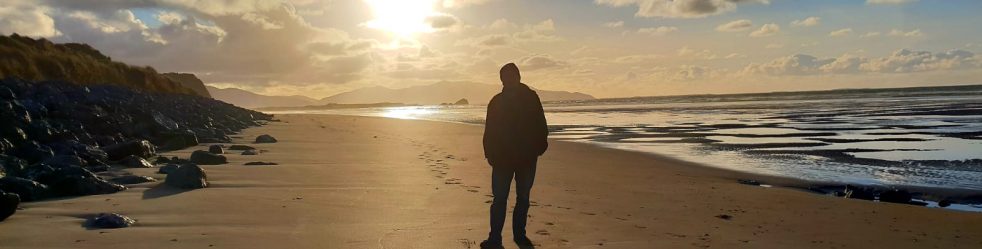
I often feel like a wanderer, roaming from town to town searching for the perfect place. I long to find stability in that perfect place but I know my only true perfect place is in heaven. My longing for stability is a good desire and one to be practiced as far as one can. But God seems to move us on in spite of that desire, through no doing of our own.
Despite parental accusations of not sticking at anything, floating about in my own consciousness of self, I don’t lack commitment to people, places and jobs. I am not the ‘type of guy who loves to roam around’ yet I find myself ‘moved on’ from situations. I was happy in Ardfert in Kerry and I was happy at Mount St Joseph Abbey Roscrea, yet God wanted me to move on. A priest recently told me that in conversation with another priest, they came to the conclusion that 90% of what they did in the world resulted in failure. That was because they saw things through the eyes of the world and not through the lens of the heavenly host. The bottom line is that Deon’s philandering wanderer does not change. I am the wanderer that God has called to change. I have changed and grown over the years and now I am called to embrace something more and something new. I don’t know what that is yet but I have to trust. I have always had the tendency to want everything planned in advance, now I am being called to trust. To really ‘let go and let God’, to truly move in the Holy Spirit and to trust his promptings at all times.
Wandering is still the lot of Christians. We travel around, yet we travel around in faith. We don’t usually see the effects our wandering encounters have on others, yet others can be blessed by those encounters. Wandering means that we don’t see the bigger picture, the greater scheme of God’s plan for his people. Yet it does exist and we need to trust it.
To wander and to travel in faith is to be a pilgrim. We Christians are all pilgrims in some shape or form. This brings me to another song. More ancient and more profound than that of Dion and The Belmonts. It is a hymn that takes its words from John Bunyan’s ‘The Pilgrim’s Progress’. The composer Ralph Vaughn Williams set it to a tune often referred to as ‘Monks Gate’. I enjoyed it when I first heard it sung at my Church of England primary school. Nowadays I find it truly inspirational…
He who would valiant be ’gainst all disaster,
let him in constancy follow the Master.
There’s no discouragement shall make him once relent
his first avowed intent to be a pilgrim.
Who so beset him round with dismal stories
do but themselves confound – his strength the more is.
No foes shall stay his might; though he with giants fight,
he will make good his right to be a pilgrim.
Since, Lord, thou dost defend us with thy Spirit,
we know we at the end, shall life inherit.
Then fancies flee away! I’ll fear not what men say,
I’ll labour night and day to be a pilgrim.
To Be A Pilgrim (Bunyan / Vaughn Williams)
 Brother Alberic