


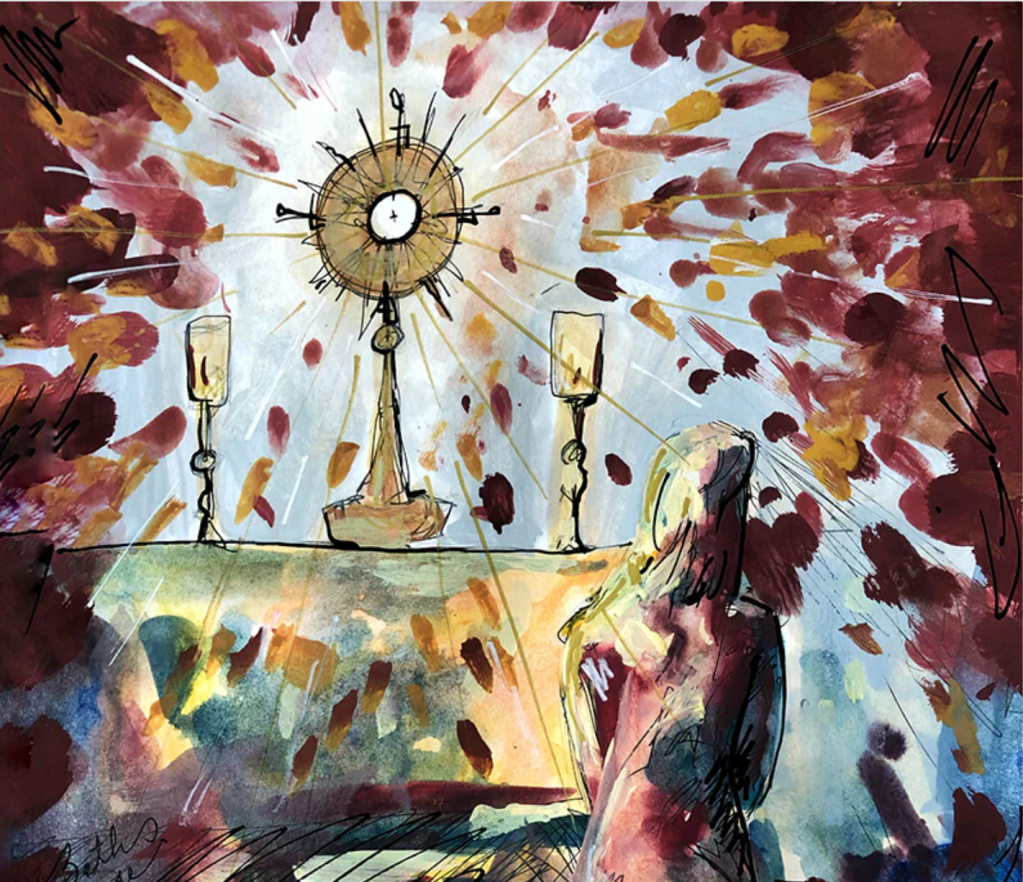

A theophany is a manifestation of God to us. Something visual that expresses God’s presence and character. It comes from the greek words meaning ‘God’ and ‘to show.’ It comes through our sensual means of communication. It is an experience of the body that in turn affirms our rightly ordered bodily experiences. As we probably know, the Christian message is about the redemption of the body, not an escape from it. So how does God show himself to us and how do we in turn experience him?
What kind of creatures are we that we experience hunger not just for physical sustenance, but for beauty? Putting words to this profound cry of his heart, a student of mine once marveled, “I don’t only want to behold the beauty of a sunrise. I want to eat it.
from Chapter 4 of Eating the Sunrise by Christopher West
I stayed at a retreat centre recently where a certain group put on an all night vigil every month. I was there for such a vigil. When I first became a Catholic I used to love all night vigils, especially if they were put on within the context of the liturgy (usually the mass) spread out in different sections across the night. On this occasion I had no interest or motivation or energy to stay up for any part of the night to adore Jesus in the blessed sacrament. I couldn’t adore Jesus, so I couldn’t go to adoration. It was only later that I realised and remembered that I had got this premise completely wrong. I wasn’t following my own advice in what I would tell people new to adoration about what was going on – I wasn’t taking my own medicine!
When I woke up in the morning I needed coffee and to sit beside the pond in the garden (reminding me of the monastery that sells T-shirts aptly proclaiming “Ora et Labora…but not before coffee!”) After the few pangs of guilt about not jumping straight into adoration had left me, I began to feel connected to the beauty of the natural environment that surrounded me. I absorbed it as something that was meant for me at that time…God’s way of saying ‘I Love You.’ At that moment I felt completely loved. That place was where I was meant to be at that time, in spite of all that was going on for me internally. God was saying to me, I love you through this beauty and your encounter with it. God had initiated, and so in this way I could love Him back. We love because God loved us first (1 John 4:19). Then came the desire to love him in the blessed sacrament and after I had finished the cup of coffee I went to the church. It was then that I realised I had got it all wrong the previous evening. I didn’t have to go to church and adoration of the blessed sacrament only to love and adore God. More often than not all I can do is just sit there and allow him to adore me!! He is my loving Father who created me for love and to experience love. Sometimes we just have to sit there and allow ourselves to be loved!
The Eucharist, as the source and summit of our worship, is the pinnacle of our life with God, the theophany of theophanies. Once we begin to be transformed by the very incarnate presence of God we can begin to appreciate the beauty that surrounds us in his creation. To notice how the rest of creation speaks to us of him (who ever has eyes to see and ears to hear – Matthew 13) is to be fully liberated in the moment. It is what motivated St. Francis to sing “praise be you my Lord through all your creatures.” Unlike St. Francis I don’t often have these moments but when I do I get a sense of the freedom, of the original innocence first man had in the Garden of Eden. It is what Jesus is leading us back to – to our Father’s house where there are many rooms. He is leading us home through these cherished moments which need to be celebrated and remembered.
It struck me that Divine Love, the root of all love, is a two way thing. It is always the little bit of give and take which lies at the heart of any healthy relationship. Accepting what is in the moment regarding our relationship with God and our surroundings, is the best any of us can do – let go and let God control the events around us and listen to what he is teaching us. Sometimes events seem to go against us in the short term, but God always sees the bigger picture. Receive the love, truth, goodness and beauty that comes from this gentle guidance. And then where there is no love in our situation, as we have received so we can, as St John of the Cross says, put some in.
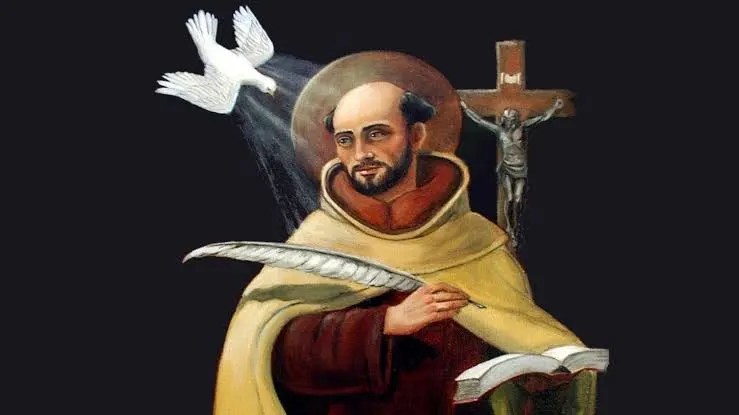
Do not let what is happening to me dear daughter cause you any grief for it does not cause me any. What greatly grieves me is that no one who is not at fault is blamed. Men do not do these things but God who knows what is suitable for us and arranges things for our good. Seek nothing else but that God ordains all and where there is no love put love and you will draw love.
St John of the Cross.
Letter 26 (To Madre María de la Encarnación, discalced Carmelite in Segovia July 6, 1591)
 Brother Alberic