
Ever since the creation of the world his invisible nature,
namely, his eternal power and deity,
has been clearly perceived in the things that have been made
Romans 1:20
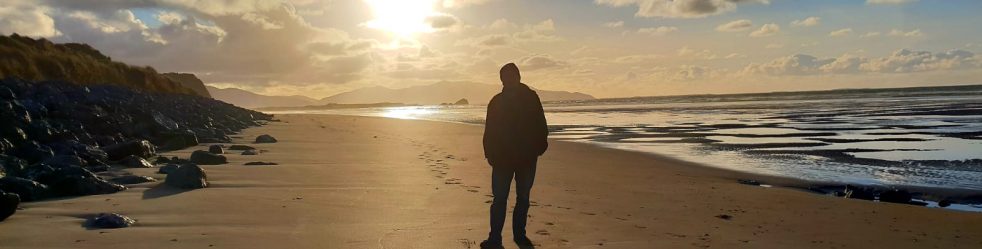
I am back at the pond! (part one – the scene of the first theophany) I am revelling in the sense of God speaking to me through the beauty of his creation. Then God is speaking to my thoughts (many and varied as they are!) Then the thought occurred… that in my purest state, I am that beauty which I see…not only that – I am more beautiful than that which I see. Then I thought about the thought – wow, that horrified me! Me? Me more beautiful than that which I see? Me? Me who is often angry, depressive, lustful, possessive, cynical…no no no no no, this cannot be says my distorted self. But Jesus sees us in our wholeness. The spirit replies with just one well pronounced gentle prompting – ‘yes, this is what you are made for… this is what you are, “My Glory I will not give to another.” ‘ (Isaiah 48:6-11).
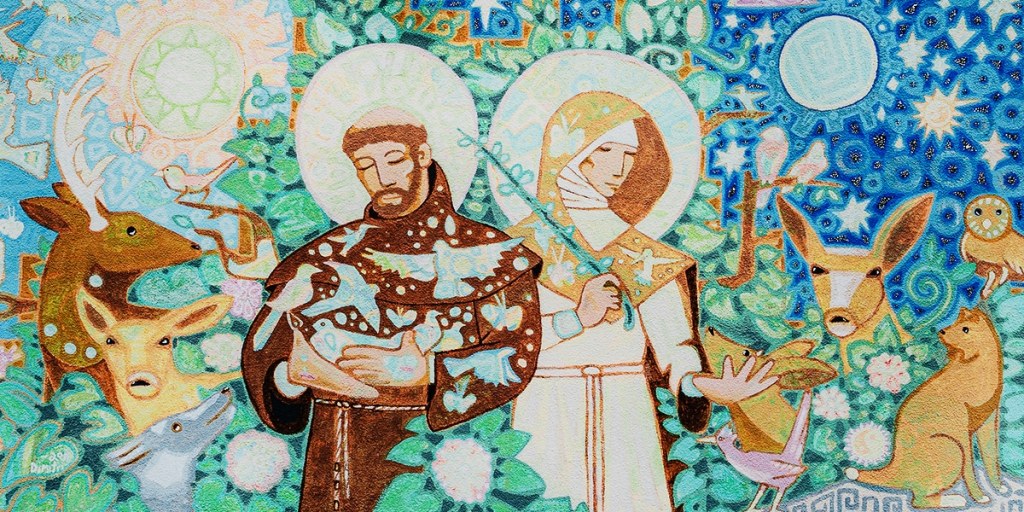
This is my magic pond! I use the word “magic” here as an adjective in its metaphorical sense. As having an exceptional, enchanting, or wonderful quality that makes ordinary events feel extraordinary. It is what happens with liturgy and the sacraments in that they take the ordinary and present us with the extraordinary things that they signify. In baptism, washing with water becomes the cleansing of the soul through God’s saving grace. In the liturgy of the mass, ordinary bread and wine become that which they signify – the extraordinary presence of God himself and the sacrifice he made for us on Calvary. Christopher West explores this in his book Eating the Sunrise (2023). He uses the word eros as a way of exploring our desire for the eternal and to direct it away from its common usage today as related solely to the sexual. We are hard wired to desire and seek beauty but if we fail to seek that which is beyond the beauty itself, or the cause of it, we have the tendency to treat the experience as an idol. Our search to stay only with that experience, and to try and repeat it, will never satisfy us. As West says in chapter 6 of his book, we can either idolize, despise or liturgize these experiences. Our desires are either fulfilled in our worship of God or we turn to God-substitutes such as sensual pleasures, power, prestige or wealth (p.120) “Oh God you are my God for you I long, for you my soul is thirsting. My body pines for you like a dry weary land without water. So will I gaze on you in the sanctuary” so says the psalmist in recognition that only God can satisfy his longing (psalm 62). God took Abram (Abraham) outside during the daytime and told him to “count the number of the stars, if you can” (Genesis 15:5). We are called to reach out for that which we cannot see or know in the midst of delighting in that which can be seen. St Francis knew this well when he delighted in the natural world as a sibling to all that exists whilst worshipping its creator. All praise be yours, my Lord, through Brothers Wind and Air, And fair and stormy, all the weather’s moods, By which you cherish all that you have made (The Canticle of the Creatures).
If we fail to liturgize – that is, if we fail to to allow the eros that has been awakened in us
by theophany to take flight and to pass over from beauty to Beauty –
our hearts will mistake that which aroused eros (the creature)
for that which alone can satisfy it (the creator). That’s idolatry.
Christopher West Eating the Sunrise p.122
So getting back to my magic pond – the way I see God’s beautiful creation is the way God sees me – Hallelujah! What a great insight – a thing to rejoice in! But not to stay there and make an idol out of my experience. Now that I see myself as beautiful (am I there yet?!). God sees those who have hurt us in exactly the same way…can we see their beauty too? (love thine enemies…can we even get there or can we even get close?) Ultimate beauty is deeply mired with the separation which is our sin. To engage with ultimate beauty we need to “cross over” to the cross and allow God to do what we cannot. This means embracing forgiveness and this in turn can be a painful process. But in Christ we don’t have to face the pain alone.
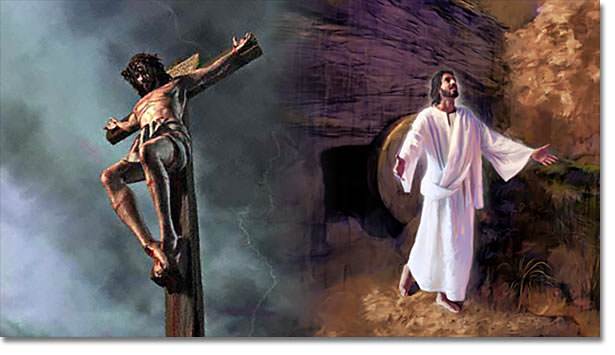
Christ crucified and risen is our measure and criterion for determining whether we are rejoicing rightly or wrongly in beauty – whether eros has gone mad or eros has gone bad. It’s gone mad when it compels us to sacrifice ourselves for the true, the good, and the beautiful. It’s gone bad when it compels us to sacrifice the true, the good, and the beautiful for ourselves…
The Gospel invites us along the way of learning how to rejoice freely and fully in the pleasures of infinite beauty, but without clinging to them. Refusing to cling to finite beauty when it awakens our yearning for the infinite involves a real internal “letting go” – a real death.
Christopher West Eating the Sunrise p.184/5
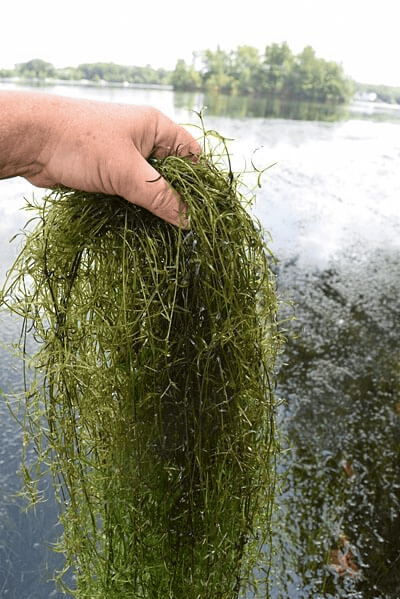
My “magic” pond is full of pond weed. The beauty can still be seen but the weed niggles away at the clarity of the water, a clarity that we’d like to see – as in being able to see through. It’s not bad in itself, pond weed, but it gets in the way of what the pond can become. The most invigorating job I’ve had in a long time was putting on a pair of waders and pulling up pond weed by hand! Splashing around in shallow muddy water whilst staying dry (well almost) is immense fun – whilst also doing something useful. The discarded weed, sodden as it was, weighed a ton and had to be transported by quad bike and trailer to a safe dumping ground. Weeds need pulling every so often and dumped in a safe place…it’s not a chore, it’s fun. I think maybe identifying the weeds is the most painful part. I can liken it to the toothache that precedes a dental extraction – an extraction which involves numbness, pressure and then immense relief – it leaves you with the bereavement of losing another tooth but you can now enjoy your food again. I don’t know where I am going with all these analogies other than to say that loss of the things that comfort us can be painful, yet clearing away the things that get in the way of God can also be a fun adventure that leads to a newness of life never experienced before. So discover how God sees you and how he sees everyone else made in his image and encounter the magic.
You have heard; now see all this;
and will you not declare it?
From this time forth I make you hear new things,
hidden things which you have not known.
They are created now, not long ago;
Isaiah 48:6/7

 Brother Alberic